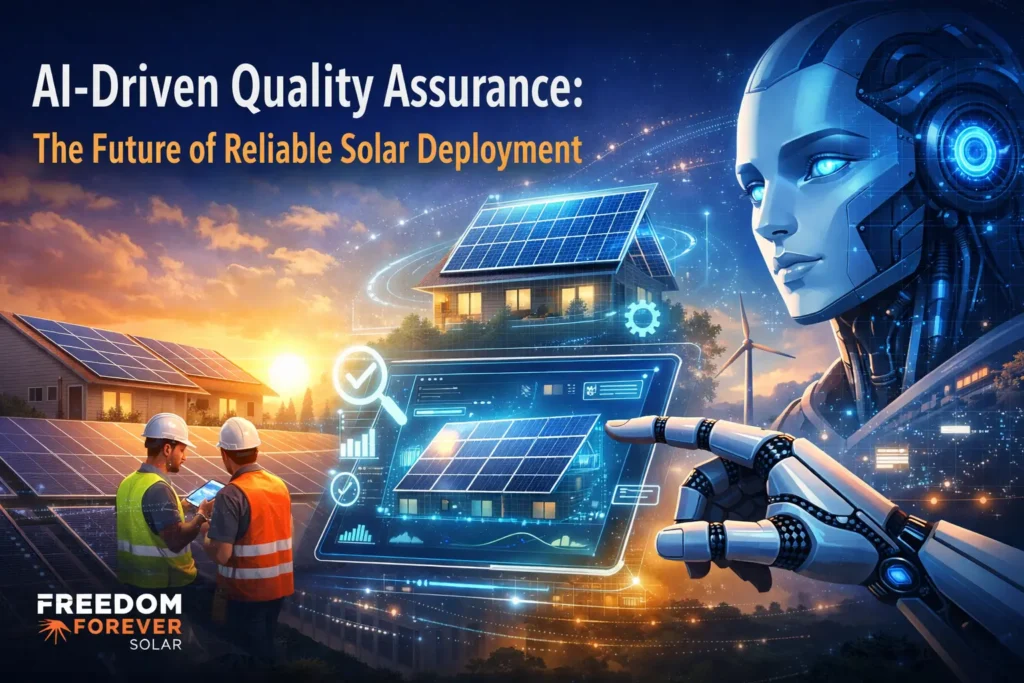
Residential solar has reached a stage where homeowners expect a level of consistency that matches the industry’s rapid growth. They want systems that are designed accurately, installed safely, and reviewed with the same precision they associate with other major home investments. With rising demand, providers are adopting artificial intelligence to enhance inspection procedures, improve quality assurance, and limit preventable issues. Technology now plays a larger role in maintaining consistency across project stages. Freedom Forever Solar, one of the nation’s largest residential providers, recognizes the value of structured oversight in this evolving landscape.
As AI-driven tools mature, they’re helping providers close the gap between customer expectations and operational execution. Automated plan checks, image-based inspections, and smart workflow alerts are reducing the likelihood of overlooked details that once led to rework or delays. By pairing these technologies with disciplined communication practices, companies can deliver a more predictable, streamlined experience that reinforces trust at every stage of the process.
Quality Assurance Has Become the Core of Customer Trust
For homeowners, the solar journey includes many moments where they depend on the provider’s attention to detail. They want assurance that the design accurately reflects real roof measurements, that components are installed correctly, and that inspectors thoroughly review the system before it is activated. Quality assurance serves as the guardrail that keeps each part of the process aligned and on track.
As providers expand into more regions, relying solely on manual oversight can introduce challenges. Differences in roof types, permitting requirements, and installation conditions create opportunities for inconsistency. AI-supported review systems help standardize quality checks so that project assessments follow the same criteria across all locations. When quality-assurance practices remain consistent, the overall process becomes more predictable. When those practices are inconsistent, even minor issues can hinder progress or necessitate additional corrections.
AI Strengthens Design Accuracy Before the First Panel Is Installed
One of the earliest opportunities to improve solar quality assurance occurs during system design. AI tools can now assist designers by analyzing roof geometry, shading patterns, and historical weather data with greater precision. It reduces the likelihood of mismatched layouts, inaccurate production estimates, or engineering revisions that slow the project. With these tools, the design customers see during onboarding mirrors the layout installers follow on installation day. This connection between early modeling and real-world installation is critical for customer trust.
Predictive Analytics Help Identify Issues Before Crews Arrive
Predictive analytics allow solar providers to anticipate potential installation challenges before the project begins. By analyzing thousands of past installations, AI systems can identify patterns that signal heightened risk, such as roof materials that require additional preparation, structural features that impact equipment placement, or environmental conditions that compromise safe installation.
When providers review these insights before sending crews to a job site, they can adjust their plans, schedule additional time, or prepare specialized materials. This level of foresight becomes an operational advantage. It helps reduce last-minute changes, improves safety, and offers homeowners an installation experience that feels organized from start to finish.
Automated Photo Checks Improve Installation Consistency
During installation, AI tools can review photos submitted by field teams to evaluate component placement, wiring patterns, and adherence to design specifications. These automated checks help confirm that each step meets safety standards before the system moves to final inspection.
In the past, installation audits relied exclusively on manual review, which could introduce variation depending on who assessed the system and how quickly they reviewed the documentation. AI-supported photo analysis applies a consistent standard to review processes, allowing deviations to be identified efficiently and with greater accuracy. This consistency matters to homeowners, even if they never see the internal review. When crews follow a clear, standardized checklist supported by AI, families notice smoother installations, fewer return visits, and fewer delays during inspection.
AI-Supported Inspections Strengthen Safety and Reliability
Inspections are the final internal checkpoint before a system is submitted for utility approval. Traditionally, these checks have relied on manual assessment, which can be time-consuming and prone to human oversight. AI helps standardize inspection processes by flagging missing information, identifying potential wiring inconsistencies, and checking whether installation photos match approved designs.
Freedom Forever reviews frequently highlight that the final approval still requires human oversight; AI tools help inspectors conduct more thorough reviews with fewer errors. It reduces the chance of rework, keeps projects on schedule, and keeps the system prepared for municipal or utility evaluations.
Quality Assurance Improves Communication with Homeowners
One of the most overlooked benefits of AI-driven quality assurance is its ability to enhance communication. When teams operate with structured, consistent data, they can explain timelines, decisions, and next steps more clearly and effectively. Homeowners feel confident when the information they receive reflects the true status of their project.
Quality assurance also reduces the number of issues that need to be communicated. When fewer discrepancies arise, fewer follow-up calls are necessary to clarify changes. This results in a cleaner, smoother customer journey.
AI Reduces Repeat Visits and Improves Long-Term System Performance
When AI-driven checks catch potential issues earlier, installation teams complete projects with fewer adjustments. It reduces the likelihood of return visits, which can disrupt schedules and cause frustration among homeowners. It also contributes to long-term reliability. Systems built to precise specifications perform more consistently over time. Homeowners feel more confident when their system launches smoothly and early performance aligns with expectations.
The Future of Solar Quality Is Built on Human Expertise and AI Support
AI-driven quality assurance does not replace the judgment of skilled designers, engineers, or installers; rather, it complements their expertise. Instead, it supports them by reducing manual review time, catching small details that might otherwise go unnoticed, and maintaining consistency across every project.
A combination of human judgment and intelligent systems is shaping the future of reliable solar deployment. This approach supports consistency across workflows, improves communication, and enables more predictable schedules. With quality assurance now central to project assessment, AI-supported tools are becoming integral to the framework used to maintain steady performance.